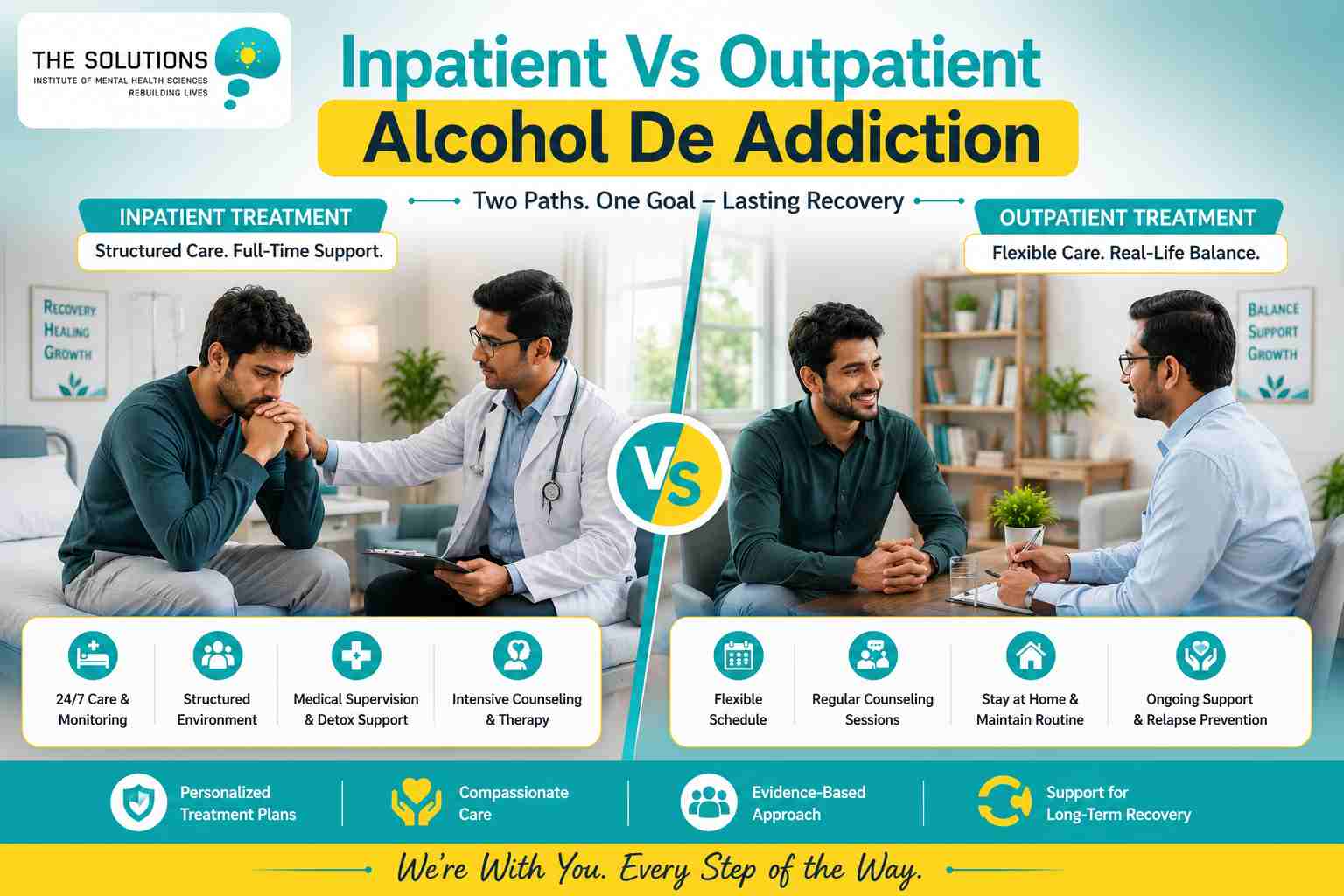
Alcohol addiction can impact every aspect of life, including physical health, emotional well-being, relationships, and professional responsibilities. Choosing the right treatment program is one of the most important decisions in the recovery journey. Understanding the differences between Inpatient Vs Outpatient Alcohol De Addiction: Which is Right for You? can help individuals and families make informed decisions based on their specific needs and circumstances. Both treatment approaches offer valuable support and recovery resources, but the right option depends on the severity of addiction, lifestyle requirements, medical needs, and recovery goals. At The Solutions IMHS, individuals can access professional assessment, personalized treatment plans, and comprehensive alcohol de-addiction programs designed to support long-term recovery.
An inpatient alcohol de-addiction program requires individuals to stay at a rehabilitation facility for a specific period while receiving intensive treatment and care. This structured environment allows patients to focus entirely on recovery without outside distractions or triggers.
Inpatient treatment often includes:
One of the biggest advantages of inpatient treatment is the continuous supervision provided by trained professionals. Individuals struggling with severe alcohol dependence or withdrawal symptoms often benefit from this level of care.
For those seeking comprehensive recovery solutions, professional rehabilitation programs such as alcohol recovery and counseling services can provide the structured support needed for long-term success.
Withdrawal symptoms can sometimes be challenging and require medical supervision. Inpatient facilities provide round-the-clock care to ensure patient safety and comfort throughout the recovery process.
Remaining in a controlled environment helps individuals avoid situations, people, or environments that may contribute to alcohol use.
Patients can dedicate their full attention to healing without balancing daily responsibilities, work commitments, or social pressures.
Many inpatient programs integrate counseling, therapy, wellness programs, and aftercare planning to support long-term recovery outcomes.
You can learn more about rehabilitation and recovery approaches through related resources on addiction treatment and behavioral therapy programs.
Outpatient alcohol de-addiction programs allow individuals to live at home while attending scheduled treatment sessions at a rehabilitation center. This option provides greater flexibility and enables participants to continue managing personal, family, or professional responsibilities during treatment.
Outpatient programs may include:
This treatment approach is often suitable for individuals with mild to moderate alcohol dependence who have a stable home environment and strong support system.
Many people choose outpatient programs because they offer access to professional care while maintaining everyday routines.
Patients can attend treatment sessions while continuing work, education, or family responsibilities.
Outpatient programs are generally more affordable than residential treatment because accommodation and round-the-clock care are not required.
Individuals can immediately apply coping strategies and recovery skills in everyday situations while receiving ongoing professional guidance.
Outpatient treatment often encourages active family participation, which can strengthen recovery support networks and improve outcomes.
Additional guidance on counseling and recovery support can be found through mental health and addiction recovery resources.
Requires individuals to stay at a residential rehabilitation facility throughout their recovery program. This approach provides a structured environment with 24/7 medical supervision, making it particularly beneficial for those experiencing severe alcohol dependence, withdrawal symptoms, or a higher risk of relapse.
The treatment intensity in inpatient programs is generally high, as individuals participate in daily counseling, therapy sessions, and recovery-focused activities. While inpatient care offers limited flexibility and typically involves higher costs, it significantly reduces exposure to alcohol-related triggers and distractions.
Allows individuals to live at home while attending scheduled therapy sessions and counseling programs. This option is often suitable for those with mild to moderate alcohol addiction who have a stable home environment and a reliable support system.
Outpatient programs provide greater flexibility, enabling individuals to continue working, studying, or managing family responsibilities during treatment. They are generally more affordable than residential programs but may involve greater exposure to everyday triggers, requiring strong commitment and effective coping strategies to maintain recovery.
Selecting the right treatment program begins with a professional assessment. Some important questions include:
Individuals experiencing severe addiction, repeated relapses, or significant withdrawal symptoms may benefit more from inpatient care. Those with mild alcohol dependence and strong support systems may find outpatient treatment effective.
A professional evaluation can help determine the most appropriate level of care and create a personalized treatment plan that addresses specific recovery needs.
Regardless of whether inpatient or outpatient treatment is chosen, professional guidance plays a crucial role in successful recovery. Counseling, therapy, relapse prevention planning, and ongoing support help individuals build healthier habits and maintain long-term sobriety.
Recovery is not simply about stopping alcohol use; it involves addressing underlying emotional, behavioral, and psychological factors that contribute to addiction. Professional treatment programs provide the tools and support necessary for lasting change.
Choosing between inpatient and outpatient alcohol de-addiction treatment is a significant decision that can shape your recovery journey. At The Solutions IMHS , experienced professionals provide guidance, counseling support, and personalized treatment recommendations to help individuals identify the most suitable recovery path.
Contact The Solutions IMHS to learn more about available rehabilitation programs, recovery support services, and personalized care options designed to support long-term wellness and a healthier future.
Recovery outcomes vary by individual needs. Inpatient vs outpatient alcohol de addiction: which is right for you? depends on addiction severity, support systems, and goals
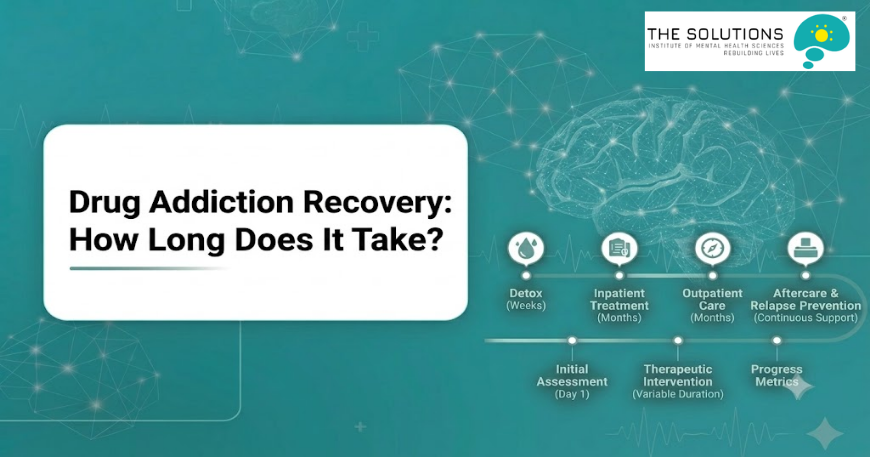
Treatment duration varies from weeks to months. Inpatient vs outpatient alcohol de addiction: which is right for you? helps determine the ideal recovery timeline.
Many outpatient programs allow work flexibility. Inpatient vs outpatient alcohol de addiction: which is right for you? depends on lifestyle and treatment needs.
Medical history, addiction level, and home support matter. Inpatient vs outpatient alcohol de addiction: which is right for you? guides treatment selection.
Family support can improve recovery outcomes significantly. Inpatient vs outpatient alcohol de addiction: which is right for you? may affect family involvement.


WhatsApp us