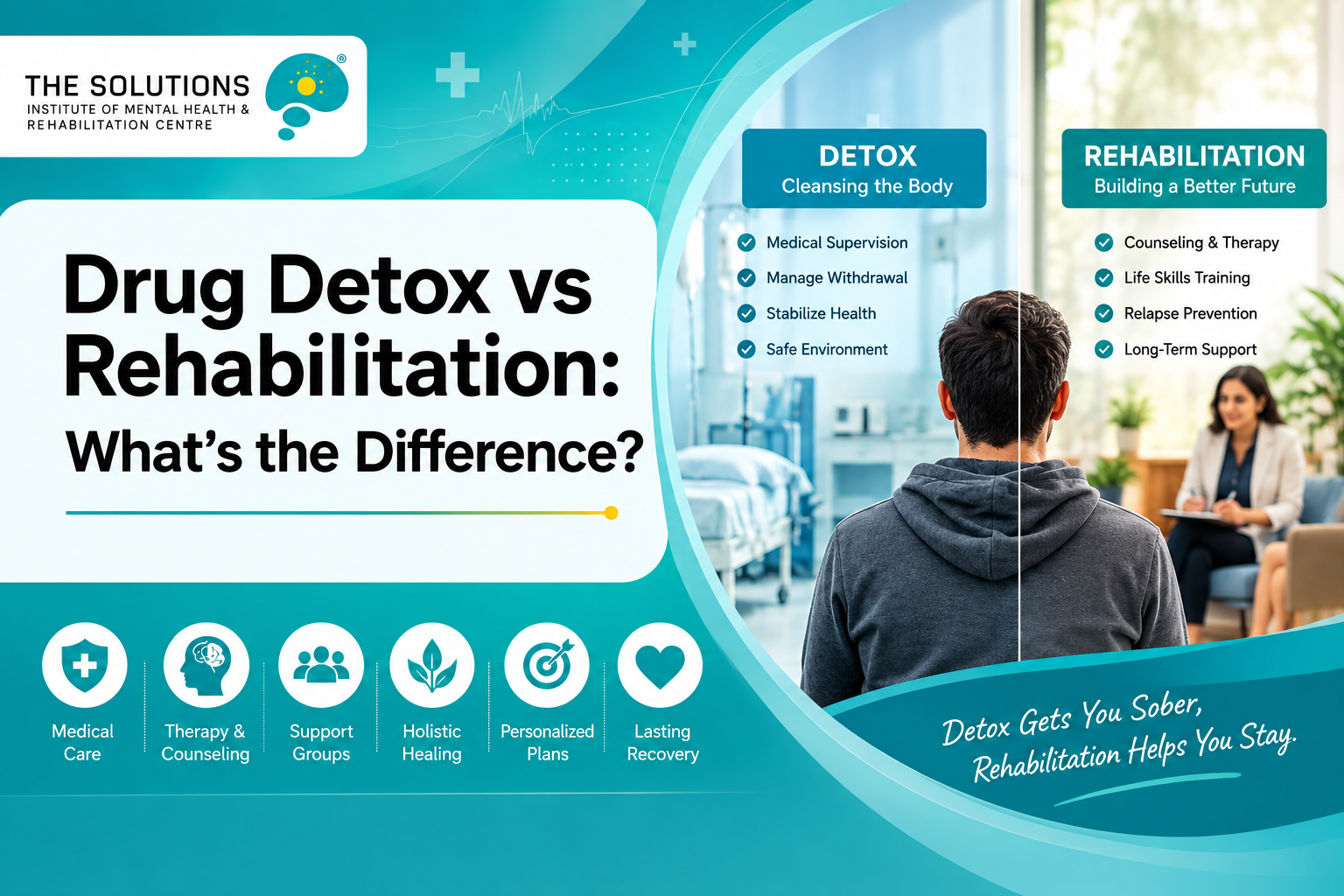
Choosing the right addiction treatment can feel confusing, especially when terms such as detox, rehabilitation, de-addiction, counselling, and recovery are often used together. One of the most common questions families ask is: Drug Detox vs Rehabilitation: What’s the Difference?
Although both detox and rehabilitation can play important roles in addiction recovery, they serve different purposes. Detox generally focuses on helping the body manage the effects of stopping substance use, while rehabilitation focuses on longer-term recovery, behavioural changes, coping skills, and rebuilding everyday life. Understanding the difference can help individuals and families make more informed decisions about professional addiction treatment. The Solutions IMHS provides structured support for individuals dealing with substance-use concerns through de-addiction care, counselling, rehabilitation, and recovery-focused services.
Drug detoxification, commonly called detox, is generally the initial stage of treatment for some people with substance dependence. Its primary purpose is to help the body adjust when a person stops using a substance.
Depending on the substance, duration of use, amount used, and individual health factors, withdrawal can range from uncomfortable to medically serious. For this reason, detox should not automatically be considered a process that someone should attempt alone. Professional assessment can help determine whether medical supervision or a higher level of care is appropriate.
Detox may focus on:
Drug rehabilitation is a broader and longer-term approach to addiction recovery. Instead of focusing only on withdrawal, Rehabilitation addresses the physical, psychological, emotional, behavioral, and social aspects of substance use. Rehabilitation may include counselling, behavioural support, structured routines, life-skills development, family involvement, relapse-prevention planning, and continuing recovery support.
The purpose is to help individuals understand their addiction, identify triggers, develop healthier coping strategies, rebuild relationships, and improve their ability to function without relying on drugs. A Rehabilitation program may be residential, outpatient, or another level of structured care depending on individual needs and professional recommendations.
Understanding Drug Detox vs Rehabilitation: What’s the Difference? becomes easier when the purpose of each stage is compared.
Drug Detox | Drug Rehabilitation |
Primarily focuses on withdrawal | Focuses on long-term recovery |
Helps the body adjust to stopping substance use | Addresses behavioral and emotional factors |
May require medical monitoring | May involve counselling and structured therapy |
Usually forms an early stage of treatment | Can continue for weeks or longer depending on needs |
Focuses strongly on immediate physical stability | Focuses on lifestyle, coping, and recovery skills |
Does not by itself address all causes of addiction | Works toward sustainable recovery |
One of the biggest misconceptions about addiction treatment is that completing detox automatically means the addiction has been treated. Detox Drug can help an individual stop using a substance and manage withdrawal, but addiction involves more than physical dependence. After detox, a person may still experience:
This is why continued treatment can be important. Rehabilitation can help individuals work on the underlying factors connected with substance use and learn strategies for maintaining recovery.
Some substances can produce significant withdrawal symptoms, and stopping suddenly may carry health risks.
Solution: A professional assessment can help determine whether supervised detox or another level of medical care is appropriate.
A person may complete detox but return to substance use when cravings or triggers appear.
Solution: Rehabilitation and counselling can help develop coping strategies, recognise triggers, and create a recovery plan.
Stress, emotional distress, and challenging life situations can contribute to substance use.
Solution: Counselling can help individuals understand emotional triggers and practice healthier ways of managing difficult situations.
Addiction can create communication problems, mistrust, and emotional stress within families.
Solution: Family counselling and education can help relatives understand addiction and provide constructive support during recovery.
Completing a treatment program does not mean that recovery support is no longer useful.
Solution: Aftercare, follow-up counselling, relapse-prevention planning, and continued support can help individuals maintain progress.
A comprehensive recovery plan may involve several services depending on the individual’s needs.
De-addiction treatment aims to help individuals move away from harmful substance use through structured professional support. Treatment planning may consider substance-use history, physical health, psychological needs, and recovery goals.
Counselling provides a confidential and supportive environment where individuals can discuss their experiences, triggers, emotions, relationships, and recovery challenges.
Rehabilitation can help individuals develop healthier routines, coping skills, communication abilities, and practical strategies for living without substance dependence.
Family participation can strengthen the recovery environment. Family counselling may help relatives understand addiction and learn healthier communication and support strategies.
Ongoing recovery support can help individuals recognise warning signs, manage triggers, maintain healthy routines, and seek help when challenges arise.
When comparing treatment options, it is important to look beyond the name of the program. Individuals and families should consider professional care, personalised treatment, counselling, rehabilitation services, and aftercare when choosing Rehabilitation Centers in Hyderabad. The right approach should always be based on the individual’s specific needs and recovery goals.
Consider the following factors:
Treatment should begin with an appropriate assessment of substance use and overall needs.
No two recovery journeys are exactly alike. Treatment should be adapted to the individual.
Look for access to appropriately qualified healthcare and mental health professionals.
Emotional and behavioural support is an important part of long-term recovery.
Family education and counselling can improve understanding and support.
Ask whether the program provides continuing support after the initial treatment period.
A structured and respectful environment can help individuals focus on recovery. Families should discuss treatment options directly with qualified professionals rather than choosing a program based solely on price, duration, or promotional claims.
The Solutions IMHS provides compassionate and structured addiction recovery support for individuals and families. The approach recognises that addiction can affect more than physical health and may require support across multiple areas of life.
Services may include de-addiction treatment, drug rehabilitation, addiction counselling, psychiatric support, family guidance, and recovery-focused aftercare, depending on individual requirements.
The focus is on understanding each person’s situation and helping them move toward healthier routines, improved coping skills, and sustainable recovery. For families in Hyderabad, professional guidance can make it easier to understand treatment options and determine the next appropriate step.
Finding suitable addiction treatment close to home can make communication and family involvement more manageable. Individuals and families searching for professional addiction support in Hyderabad can explore treatment options based on their specific needs.
The Solutions IMHS offers a supportive environment for individuals seeking help with substance-use concerns. The focus remains on professional guidance, personalised care, rehabilitation, counselling, and continued recovery support.
Families should seek professional advice if substance use is affecting physical health, emotional well-being, relationships, work, education, or everyday responsibilities.
If you or someone you care about is struggling with substance use, The Solutions IMHS is here to provide professional guidance and support.
Contact us to learn more about de-addiction treatment, drug detox support, rehabilitation, addiction counselling, family support, and aftercare services in Hyderabad.
No. Drug Detox vs Rehabilitation: What's the Difference? Detox manages withdrawal, while rehabilitation focuses on long-term recovery.
Rehabilitation may follow detox to address triggers, habits, and recovery skills. Drug Detox vs Rehabilitation: What's the Difference? explains these stages.
It depends on the individual's condition and substance use. Drug Detox vs Rehabilitation: What's the Difference? highlights why professional assessment matters.
Duration varies based on individual needs and recovery progress. Drug Detox vs Rehabilitation: What's the Difference? helps explain the treatment process.
Neither replaces the other. Drug Detox vs Rehabilitation: What's the Difference? shows how each serves a different recovery purpose.
WhatsApp us