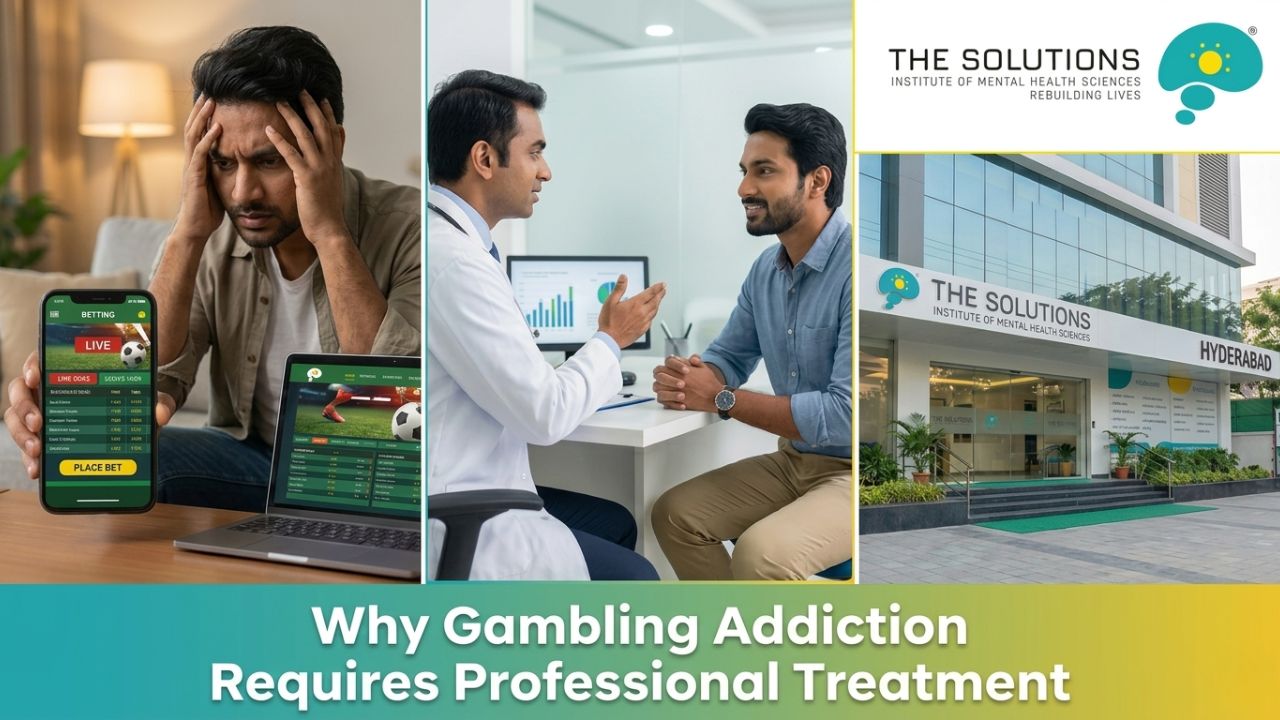
Within the first steps of recognizing a problem, many individuals turn to The Solutions IMHS for guidance, understanding that gambling addiction is not just a habit but a serious mental health condition requiring expert care.
Gambling addiction, also known as compulsive gambling or gambling disorder, is a behavioral addiction that can disrupt every aspect of a person’s life. From financial losses to emotional instability and damaged relationships, its impact is far-reaching. While some may believe they can quit on their own, the reality is that professional intervention is often essential for long-term recovery.
Gambling addiction is classified as a behavioral disorder with similarities to substance addiction. It activates the brain’s reward system, releasing dopamine, which reinforces repeated behavior despite harmful consequences.
Professional treatment becomes necessary because this condition affects brain chemistry, decision-making, and emotional regulation.
Many individuals underestimate the seriousness of gambling addiction until it escalates. The consequences extend beyond financial loss.
Self-control alone is rarely enough to overcome gambling addiction. Here’s why professional help is crucial:
Mental health professionals assess underlying conditions such as anxiety, depression, or impulse control disorders.
Evidence-based therapies like Cognitive Behavioral Therapy (CBT) help change harmful thought patterns.
In some cases, medications may be prescribed to manage cravings or co-occurring disorders.
Professionals teach coping mechanisms to handle triggers and high-risk situations.
Recovery is a long-term process requiring consistent guidance and accountability.
Professional treatment involves a combination of therapeutic and supportive interventions:
Helps individuals identify triggers and replace unhealthy behaviors.
Encourages shared experiences and peer support.
Rebuilds trust and improves communication within families.
Focuses on stress reduction, routine building, and healthy habits.
Structured environments that promote recovery and prevent relapse.
Alcohol De-Addiction often coexists with substance abuse, especially alcohol dependency. Alcohol lowers inhibitions and impairs judgment, making risky behaviors like gambling more likely.
Similar to alcohol, drug abuse can intensify gambling behaviors. Substances like stimulants increase impulsivity, while depressants reduce self-control.
Combining drug and gambling addiction treatment ensures a holistic recovery approach.
Certain personality disorders increase vulnerability to gambling addiction, particularly those involving impulsivity and emotional instability.
Professional evaluation helps identify these conditions and tailor treatment accordingly.
Recognizing early warning signs can prevent severe consequences:
Seeking help from experienced centers like The Solutions IMHS can significantly improve recovery success.
Overcoming gambling addiction is not just about willpower it requires structured, professional intervention to address psychological, emotional, and behavioral aspects. With expert care, individuals can regain control, rebuild relationships, and lead healthier lives.
The Solutions IMHS Contact us today to begin your recovery journey with expert psychiatric care, personalized treatment plans, and compassionate support designed to help you achieve lasting mental wellness and stability.
While some may try self-control, why gambling addiction requires professional treatment becomes evident because therapy addresses root causes and provides structured recovery.
Yes, why gambling addiction requires professional treatment is important because it affects brain reward systems similarly to drugs and alcohol.
Recovery varies, but why gambling addiction requires professional treatment ensures consistent progress through guided therapy and support.
Absolutely, and why gambling addiction requires professional treatment includes family counseling to rebuild trust and strengthen support systems.
Relapse is possible, which is why gambling addiction requires professional treatment that includes relapse prevention strategies and ongoing care.

WhatsApp us