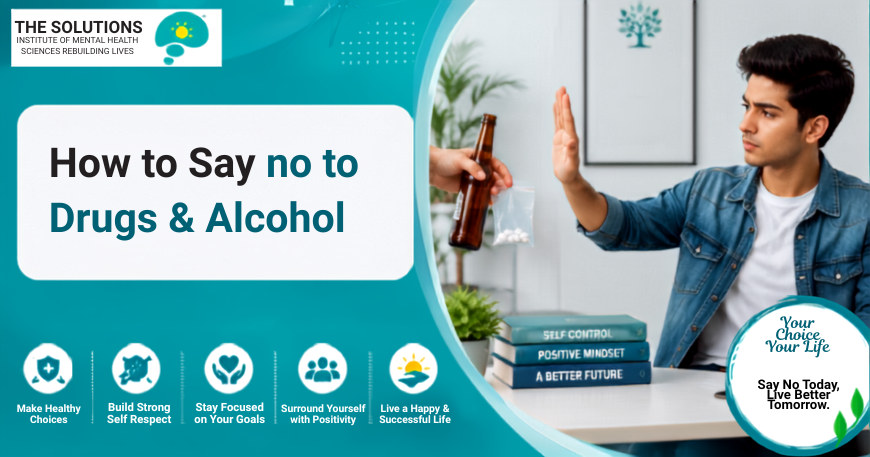
Saying no to drugs and alcohol can sometimes feel difficult, especially when you are surrounded by people who are using them. Peer pressure, social situations, stress, curiosity, or the desire to fit in can make it challenging to maintain healthy boundaries. However, learning how to say no to drugs and alcohol can help you protect your physical health, emotional well-being, relationships, and future goals.
At The Solution IMHS, we understand that making healthy choices is an important part of maintaining long-term well-being. Whether you are trying to avoid substance use, supporting a loved one, or looking for professional help, developing confidence and knowing when to seek support can make a significant difference.
Drugs and alcohol can affect the body and mind in different ways. Regular or excessive substance use may interfere with decision-making, relationships, work, education, and overall quality of life. For some individuals, occasional use can also develop into problematic substance use over time.
Learning to say no is not about judging other people. It is about understanding your own boundaries and making decisions that support your health and personal goals.
A confident “no” can help you:
Knowing your reasons for staying away from drugs and alcohol can make it easier to remain confident when someone offers them.
There is no single correct way to refuse drugs or alcohol. The best response is one that feels natural and comfortable for you. Preparing your response ahead of time can make difficult situations easier to handle. If you are struggling with substance use, an Alcohol & Drug Addiction Center can also provide professional guidance and support.
You do not need to provide a detailed explanation. A simple statement such as “No, thank you,” “I don’t drink,” or “I’m not interested” can communicate your decision clearly.
If someone continues asking, repeat your answer without getting into an argument. Your decision deserves to be respected.
Peer pressure can happen at parties, social gatherings, workplaces, colleges, or even among close friends. Think about situations where you may be offered drugs or alcohol and prepare a few responses in advance.
For example:
Practising these responses can make you feel more prepared and confident.
The people around you can influence your choices. Healthy friendships should allow you to make your own decisions without feeling pressured.
Spend more time with people who respect your boundaries and support positive activities. If someone repeatedly pressures you to use drugs or alcohol, consider creating distance from that situation or relationship.
If you know you may be in an environment where drugs or alcohol are present, plan how you will leave if you become uncomfortable. You could arrange your own transportation, stay connected with someone you trust, or decide beforehand when you will leave.
Having an exit plan can give you greater confidence because you know you are not trapped in an uncomfortable situation.
People may turn toward substances because they are dealing with stress, loneliness, anxiety, difficult relationships, or other challenges. Finding healthier ways to manage these feelings can make it easier to avoid substance use.
Consider activities such as:
Developing healthy coping skills is an important part of protecting your long-term well-being.
Knowing how to say no to drugs and alcohol can be especially difficult if substance use has already become part of your routine. In these situations, simply trying to stop through willpower may not always be enough.
Professional support can help address both the physical and emotional aspects of substance use. Depending on individual needs, treatment may include assessment, counselling, behavioural therapies, mental health support, detoxification, Rehabilitation, and relapse-prevention planning. At The Solution IMHS, individuals can explore appropriate support based on their specific needs. Treatment should focus on the person as a whole rather than only the substance being used.
For people who have developed physical dependence, drug detox may be an important first stage of treatment. Detox focuses on safely managing withdrawal and helping the body adjust to the absence of substances.
Drug rehabilitation goes further by addressing emotional health, behavioral patterns, triggers, coping strategies, and relapse prevention. Therapy and structured support can help individuals develop practical skills for maintaining recovery. Combining appropriate detox and rehabilitation services can provide a more comprehensive approach to recovery.
Saying no becomes easier when your everyday lifestyle supports your decision. Set realistic goals and focus on activities that give you a sense of purpose.
Create routines that include healthy meals, physical activity, meaningful relationships, productive work, and adequate rest. Celebrate small achievements and recognize that building new habits takes time.
If you are supporting someone who is trying to avoid drugs or alcohol, offer encouragement rather than criticism. A supportive environment can make a significant difference in someone’s willingness to seek help.
Consider speaking with a qualified professional if you or someone you know:
Seeking professional help early can provide guidance and support before substance use causes further problems.
Learning how to say no to drugs and alcohol becomes easier with the right guidance and support. At The Solution IMHS, we focus on helping individuals build confidence, develop healthy coping strategies, and make positive lifestyle choices.
Guidance based on individual needs and challenges.
Compassionate care from trained professionals.
Practical strategies to manage stress, triggers, and peer pressure.
Support for building healthier habits and long-term well-being.
A safe and supportive space to discuss concerns openly.
Choose The Solution IMHS and take a confident step toward a healthier, substance-free future.
Learning how to say no to drugs and alcohol starts with confidence, preparation, healthy boundaries, and the right support system. You do not have to face challenges alone. Whether you are looking for guidance on preventing substance use or need support for an existing addiction, professional care can help you move toward a healthier and more stable future.
The Solution IMHS is committed to providing compassionate support for individuals and families affected by substance use and related challenges. If you are ready to take the next step, reach out to our team today.
Choose support. Choose healthier habits. Choose recovery.
Start Your Recovery Today to learn more about available treatment and support options and take the first step toward a healthier future.
Learning how to say no to drugs and alcohol starts with confidence. A simple “No, thank you” can help you set clear boundaries.
Knowing how to say no to drugs and alcohol helps you handle peer pressure. Stay confident and choose supportive friends.
Understanding how to say no to drugs and alcohol helps protect your health and build healthier habits and relationships.
If how to say no to drugs and alcohol feels difficult, seek professional support. Counseling can help manage triggers and cravings.
Yes, The Solution IMHS offers professional support to help individuals learn how to say no to drugs and alcohol and build healthier habits.
WhatsApp us