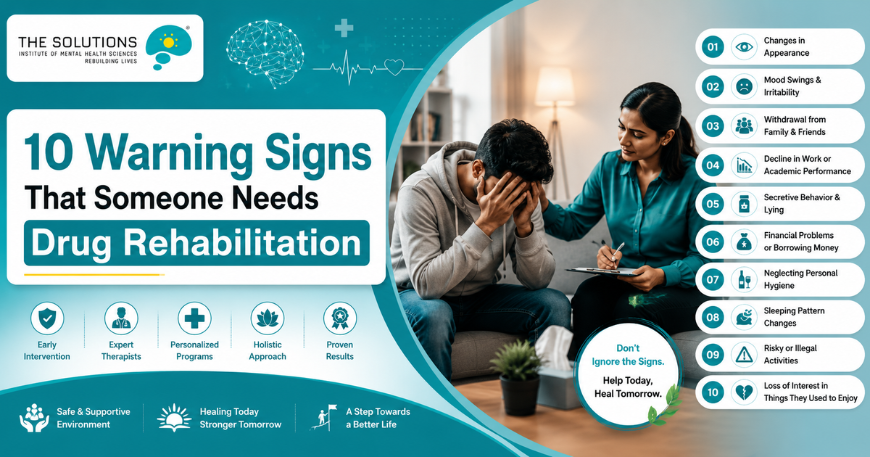
Drug addiction can gradually affect almost every part of a person’s life, including physical health, emotional well-being, relationships, career, education, and financial stability. In many situations, the early signs may be subtle, making it difficult for individuals and their families to recognise that professional help may be needed. Understanding the 10 Warning Signs That Someone Needs Drug Rehabilitation can help families identify concerning patterns and encourage timely support.
At The Solution IMHS, we understand that addiction is a complex issue that can affect every individual differently. Our approach focuses on compassionate care, professional guidance, counselling, de-addiction, mental health support, and rehabilitation based on individual needs. Recognising the warning signs is often the first step toward seeking appropriate treatment and beginning a healthier recovery journey.
Drug dependence does not always look the same. Some individuals may experience obvious physical changes, while others may initially show behavioural, emotional, or social changes. A person may also try to hide their substance use from family members, friends, or colleagues.
When several warning signs appear together, it may indicate that drug use is becoming difficult to control. Recognising these changes early can help families approach their loved one with understanding rather than judgment.
Professional addiction treatment can provide structured support, help identify triggers, and encourage healthier coping strategies. Early intervention may also help prevent substance use from causing further damage to a person’s health, relationships, and future.
Persistent cravings can make it difficult for a person to focus on everyday responsibilities. They may spend significant time thinking about obtaining, using, or recovering from the effects of drugs.
When cravings become a dominant part of daily life, professional counselling and de-addiction support can help individuals understand their triggers and develop healthier ways of managing them.
One of the most important warning signs is repeatedly trying to stop or reduce drug use without being able to maintain the change. A person may recognise that drugs are causing problems but still feel unable to control their use.
Repeated attempts to quit followed by returning to substance use can indicate that professional addiction support may be beneficial. Rehabilitation provides a structured environment in which individuals can work toward recovery under appropriate professional guidance.
Sudden changes in personality or behaviour can be another warning sign. Someone who was previously responsible, social, or emotionally stable may become secretive, withdrawn, irritable, aggressive, or unusually unpredictable.
Behavioural changes alone do not necessarily prove drug addiction. However, when they occur alongside other signs such as secrecy, declining responsibilities, or physical changes, they should not be ignored.
Drug use may gradually become more important than everyday responsibilities. A person might frequently miss work, skip classes, arrive late, stop completing household duties, or lose interest in personal goals.
If substance use is repeatedly interfering with education, employment, or family responsibilities, it may be time to consider professional rehabilitation. A structured recovery program can help individuals rebuild routines and regain control over important areas of life.
Changes in physical health can sometimes indicate problematic substance use. Depending on the substance and individual circumstances, warning signs may include changes in sleep, appetite, energy levels, personal hygiene, or overall appearance.
Frequent health complaints or a noticeable decline in well-being should receive appropriate professional attention. If drug use is contributing to health problems, an individualised treatment plan can help address the person’s recovery needs.
Addiction can affect much more than physical health. Emotional well-being and relationships may also change significantly as substance use progresses. Recognising these signs can help families understand when additional support may be necessary.
A person struggling with drug addiction may experience noticeable changes in their emotions. They may become unusually anxious, angry, restless, sad, or emotionally withdrawn. In some situations, drugs may be used as a way to cope with stress or difficult emotions, creating a cycle that becomes increasingly difficult to break. Mental health care and counselling can help individuals explore underlying concerns while working toward recovery.
At The Solution IMHS, mental health care and addiction treatment can be incorporated into a personalised approach, recognising the connection between emotional well-being and substance use.
Addiction can place considerable strain on relationships. A person may begin to avoid family members, lose contact with friends, or become increasingly isolated.
Arguments, broken trust, secrecy, and changes in social circles can also occur. If drug use is consistently creating conflict within the family or affecting important relationships, professional support can help the individual and their loved ones understand the situation and explore healthier ways forward.
As drug use increases, an individual may spend more money on substances and begin experiencing financial difficulties. They may borrow money frequently, sell personal belongings, hide expenses, or struggle to manage regular financial responsibilities.
Financial problems can create additional stress, which may further contribute to unhealthy substance-use patterns. Addressing the addiction through appropriate treatment can be an important step toward restoring stability.
Some warning signs suggest that substance use has become particularly disruptive and requires prompt professional attention.
Some people experience physical or psychological symptoms when they reduce or stop using certain substances. Depending on the substance and individual circumstances, withdrawal may involve anxiety, restlessness, sleep difficulties, sweating, nausea, or other symptoms.
Withdrawal can sometimes become medically serious. Anyone experiencing significant or potentially dangerous withdrawal symptoms should seek professional medical guidance rather than attempting to manage severe symptoms without appropriate support.
One of the strongest indicators that professional help may be needed is continuing to use drugs despite repeated negative consequences. A person may understand that substance use is affecting their health, relationships, finances, work, or personal life but still feel unable to stop.
This pattern can indicate a need for structured addiction treatment. Rehabilitation can provide professional support while helping individuals understand their behavior, identify triggers, develop healthier coping mechanisms, and work toward long-term recovery.
Understanding the 10 Warning Signs That Someone Needs Drug Rehabilitation is only the beginning. The next step is finding an appropriate treatment approach based on the individual’s circumstances. Drug rehabilitation may involve several forms of support, including de-addiction treatment, counselling, mental health care, rehabilitation programs, inpatient care, outpatient care, and ongoing recovery support. The appropriate approach depends on factors such as the person’s substance use, overall health, personal circumstances, treatment history, and recovery goals.
Counselling can help individuals explore the emotional and behavioural factors connected with substance use. De-addiction support can guide individuals as they work toward reducing or stopping problematic substance use. Rehabilitation focuses on developing healthier routines and skills that can support life beyond addiction.
When you recognise the 10 Warning Signs That Someone Needs Drug Rehabilitation, Choosing the Right Treatment and support can make an important difference in the recovery journey. The Solution IMHS provides compassionate, personalised, and recovery-focused care for individuals facing addiction and related challenges. Our approach combines addiction treatment, de-addiction, counselling, mental health care, and rehabilitation to address individual needs while creating a respectful and supportive environment.
At The Solution IMHS, every individual receives care based on their unique circumstances, recovery goals, and treatment requirements. With inpatient and outpatient care, professional guidance, personalised treatment, and ongoing recovery support, we help individuals develop healthier coping strategies and rebuild confidence. We also understand the importance of family involvement and provide supportive guidance to help loved ones better understand the recovery process. If you or someone you care about is showing the 10 Warning Signs That Someone Needs Drug Rehabilitation, seeking professional support can be the first step toward a healthier and more positive future.
Recognising the 10 Warning Signs That Someone Needs Drug Rehabilitation can help individuals and families take action before addiction causes further harm. Inability to stop using drugs, strong cravings, behavioural changes, neglected responsibilities, declining health, emotional difficulties, relationship problems, financial concerns, withdrawal symptoms, and continued drug use despite negative consequences are important signs that should not be overlooked.
Recovery is possible, and seeking help is a positive step toward a healthier future. With professional addiction treatment, counselling, de-addiction, mental health support, and rehabilitation, individuals can work toward rebuilding their confidence, relationships, routines, and quality of life. The Solution IMHS is committed to providing compassionate, recovery-focused support for individuals who are struggling with addiction and related challenges.
If you or someone you care about is experiencing these warning signs.
Contact us today to learn more about available addiction treatment, counselling, de-addiction, mental health care, and rehabilitation services.
Seek professional help when drug use becomes difficult to control. The 10 Warning Signs That Someone Needs Drug Rehabilitation can help identify when rehab may be needed.
Yes, addiction can affect health, relationships, work, and finances. The 10 Warning Signs That Someone Needs Drug Rehabilitation can help recognize these changes.
Early treatment can prevent addiction from worsening. The 10 Warning Signs That Someone Needs Drug Rehabilitation can help families seek timely support.
Yes, families may notice changes in behavior, mood, or responsibilities. The 10 Warning Signs That Someone Needs Drug Rehabilitation can help identify these concerns.
Rehab offers counselling, treatment, and recovery support. The 10 Warning Signs That Someone Needs Drug Rehabilitation can help identify when care is needed.
WhatsApp us